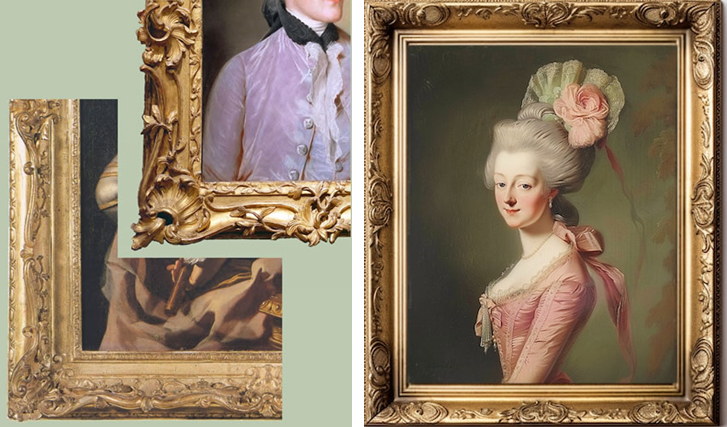
The evolution toward curving, scrolling lines in frame design led straight top edges to dissolve into ‘’swept’’ C and S shaped rails that echoed the ornamental corner motifs. These mouldings accumulated finely carved decoration, their surfaces engraves or punched with intricate textures. This period marked the height of maitre-scrulpteur, the repareur who refined gessoed details and the dereur who added punchwork and varied gilding effects, together creating grand-luxe frames that’s stood as sculptural works in their own right. The style reached its apogee in the Rococo, an asymmetric, highly ornamental aesthetic mirroring the sweep and swirl of eighteenth-century costume, boiseries, stucco, and metalwork, incorporating shells, pierced motifs, rocailles, animals, and foliate designs inspired by ideals of nature. Rococo frames became especially popular for portraiture, their sinuous forms echoing the curves of the human figure, the curls of wigs and ringlets, and the exuberant movement of eighteenth-century fashion.
Frame montages
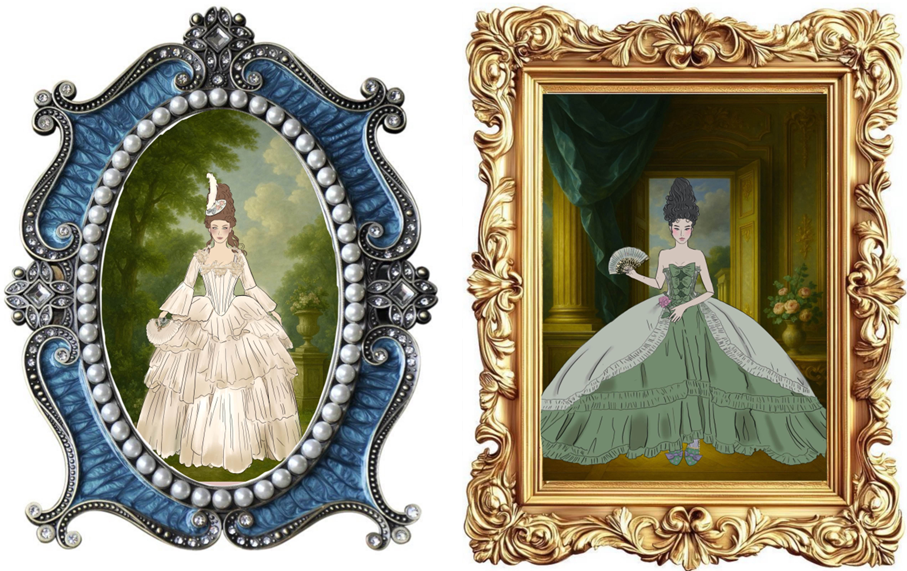
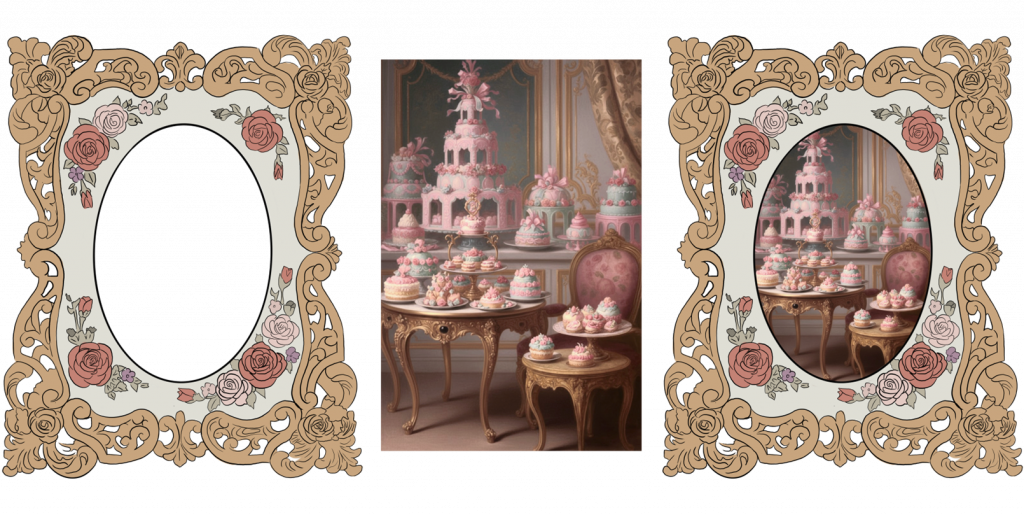
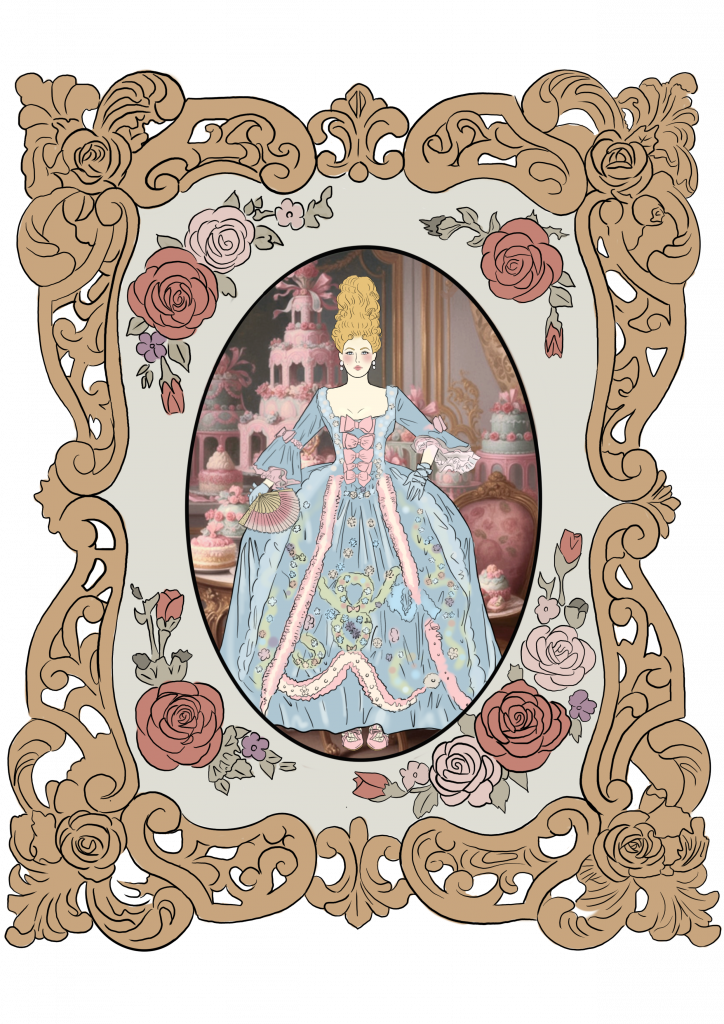
I think having pink/ red roses of the inner layer of the frame, it’s better than just a regular Rococo style gold frame to outline the work. It harmonises both colour palette of the paper doll outfit and the background.
Bibliography
Paul Mitchell (no date) A concise history of frames.